 17m
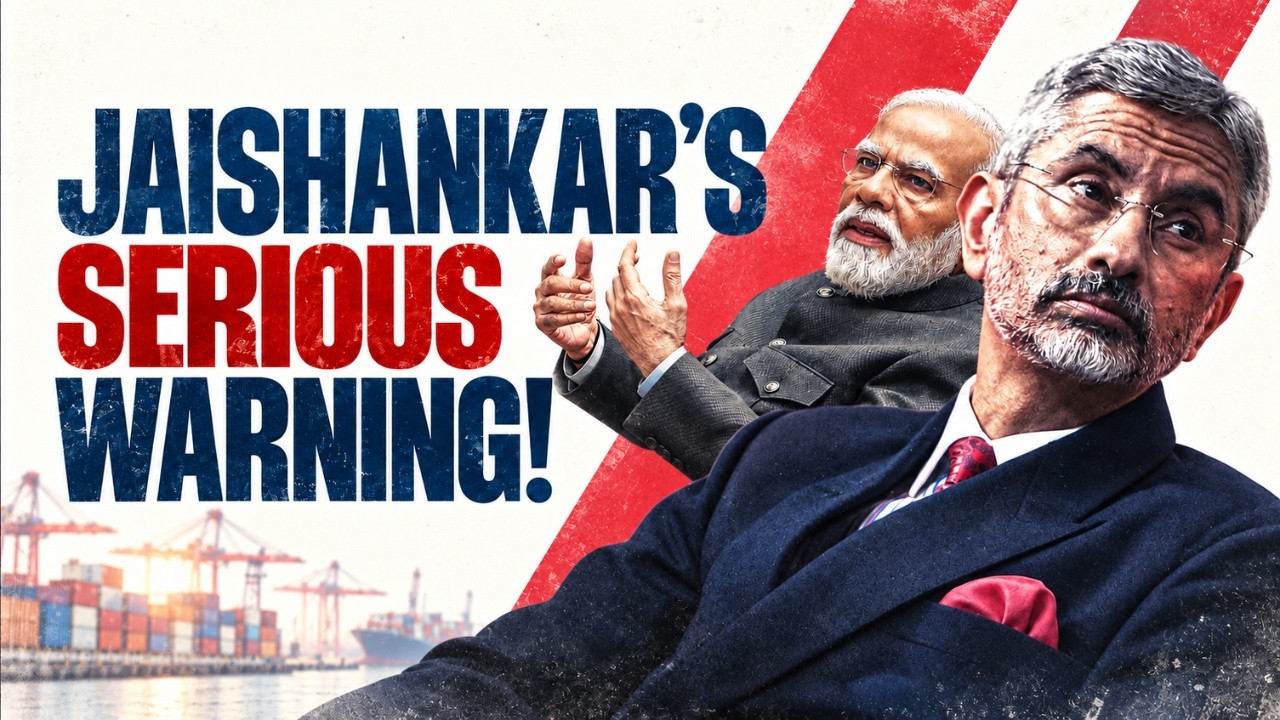
India's Biggest Economic Threat | Why Jaishankar Is Warning Every Indian About the 4F Crisis?
TL;DR
- 1Jaishankar warns of a 4F crisis: fuel, food, fertilizer and finance.
- 2India's strategic oil reserve covers only about 9.5 days, per the video.
- 3Grain stocks are strong, but cooking oil, pulses and a weak monsoon are risks.
- 4The four Fs feed each other in a vicious cycle through the rupee.
- 5Fuel and fertilizer self-reliance could create big business opportunities.
Key Insights
- 1
India has faced a food crisis before
Think School opens in October 1965, when Prime Minister Lal Bahadur Shastri asked every Indian to "sacrifice one meal at least a week" because the country didn't have enough food. By 1966, the video says, an average of three American ships a day were docking at Indian ports with grain, and an economist called India a "ship-to-mouth economy." It sets this against Foreign Minister S. Jaishankar's recent warning that the Global South faces "a four F crisis of fuel, food, fertilizer, and finance."
- 2
Fuel: diversified suppliers, thin emergency reserves
According to the video, India imports over 88% of its crude oil, and before the war about 40–50% of those imports passed through the Strait of Hormuz, which has been disrupted repeatedly since February. India has reduced that risk by sourcing from 41 countries instead of 27. Its weak spot is the strategic petroleum reserve, which the video says holds only about 9.5 days of oil even when completely full.
- 3
Why oil company stocks aren't a substitute for strategic reserves
Oil companies hold roughly 74 days of stock, the video notes, but drawing on it is disruptive because crude isn't only used for petrol and diesel. It also becomes LPG, naphtha, jet fuel, bitumen, lubricants and other products that feed cooking, plastics, pharma, textiles, cement and aluminum. Diverting that crude to petrol and diesel, which the video says the government did, means other industries face shortages or price spikes.
- 4
Oil marketing companies are absorbing the price shock
The video says India's crude basket has touched $117.4 a barrel, against an average of about $66 last year, yet petrol and diesel prices haven't risen nearly as much. The gap is being covered by Indian Oil, BPCL and HPCL, which it says are losing about ₹530 crore a day, roughly ₹8 a litre on petrol, ₹9 a litre on diesel and ₹300 on every LPG cylinder.
- 5
Fertilizer: heavy imports and a huge subsidy bill
Every crop needs nitrogen, phosphorus and potassium, and India imports heavily: urea or the gas to make it largely moves through the Strait of Hormuz, phosphate comes from Saudi Arabia, Morocco, China and Egypt, and potash from Canada, Russia and Belarus. The video says the government buys a 45 kg bag of urea for about ₹3,000 but sells it to farmers for ₹242, spending close to ₹1.1 lakh crore on urea subsidy alone. It adds that the central government spends more on fertilizer subsidy than on education or healthcare.
- 6
Fertilizer stocks are high, but distribution lags
On paper, the video says, India is well prepared: as of 30 September it held 6.8 million tonnes of urea, a multi-year high, and diammonium phosphate stocks were 17% higher than a year earlier. But farmers in villages are still queuing from 4 a.m., which the video attributes to distribution problems. It argues India needs to reduce its dependence on fertilizer imports over the next two decades so that subsidies stop crowding out spending on highways, education and healthcare.
- 7
Food: a grain superpower that imports its cooking oil
The video describes India as "two completely different countries" on food. In grain it is a superpower, holding about three times the rice its emergency buffer requires and feeding 81 crore people free rations every month. But it imports 56% of its cooking oil (mainly from Indonesia and Malaysia) and 15–20% of its pulses (from Russia, Australia, Canada and Myanmar). As the video puts it, your roti is Indian, but your cooking oil isn't.
- 8
A weak monsoon raises the risk of food inflation
The video says this year's monsoon ended 13% below normal, with East and Northeast India 26% short, South India down 24%, and drought declared in five states. India grows about 3.6 million tonnes of tur dal but eats about 4.4 million, and perishables like onions, tomatoes and greens depend on rain. So food prices could rise from supply shortfalls as well as from higher fuel and fertilizer costs.
- 9
Food takes a far bigger share of Indian budgets
Per the video, food takes about 47% of spending in rural India and almost 40% in urban areas, compared with 29.3% in China (for food, alcohol and tobacco) and 12.9% in the US (including eating out). When dal, oil and onions get costlier, poorer households cut back on clothes, shoes and bikes. When millions do this together, the video argues, the wider economy slows.
- 10
Finance: foreign money leaves, and the rupee falls
In wartime, the video explains, investors move money to the safest assets, the US dollar and US government bonds. It says foreign investors pulled more than ₹3.05 lakh crore out of Indian shares in the first nine months of 2026, which weakens the rupee and makes imports like oil more expensive. On the positive side, it credits the RBI with building foreign exchange reserves of $747.56 billion, enough for about 11 months of imports against a global safety minimum of three, which slows the rupee's fall and reassures lenders.
- 11
The four Fs form a vicious cycle
The video's central argument is that the four problems reinforce each other. Expensive fuel makes fertilizer expensive, because fertilizer is made from gas. Expensive fertilizer plus bad weather makes food expensive. The government then spends heavily on subsidies and oil imports, draining finances. Foreign investors leave, the rupee falls, and a weaker rupee makes fuel even more expensive. Rather than predicting India will run out of food, it says the real problem is that foreign money won't return until oil prices cool, so it advises startups to raise money now and keep at least two years of runway.
- 12
From Indira Gandhi's vow to today's opportunities
The video recounts that in 1966, US President Lyndon Johnson held back wheat shipments to pressure India, and after asking him to release them, Indira Gandhi told her team, "I don't ever want India to have to beg for food again." It credits that resolve with leading to the Green Revolution. It argues fuel is today's equivalent, and, citing a framework from a friend in wealth management (what India is paranoid about, prioritizes and wants to prohibit), points to opportunities. Examples include rooftop solar, with subsidies of up to ₹78,000 per household and 6 million of a 10-million-household target reached; biomass pellets, where power plants must burn 7% crop waste but India makes only about 2.5 million of the 35 million tonnes needed; urea alternatives; and Indian-made solar cells, which government-backed projects must use from 1 June 2026.
Chapter Breakdown
- 0:001965: Shastri's one-meal appeal
- 0:39Jaishankar's 4F warning
- 3:14The four Fs
- 3:32Fuel: imports, Hormuz and reserves
- 5:20The cost of keeping fuel affordable
- 6:12Fertilizer: imports and subsidies
- 8:20Food: grain strength, oil and pulse imports
- 10:17Finance: foreign outflows and the rupee
- 12:21The four Fs as a vicious cycle
- 12:50Indira Gandhi's 1966 vow
- 14:09Business opportunities in the crisis
Prefer a narrative?
Read the full blog post