 1h 15m
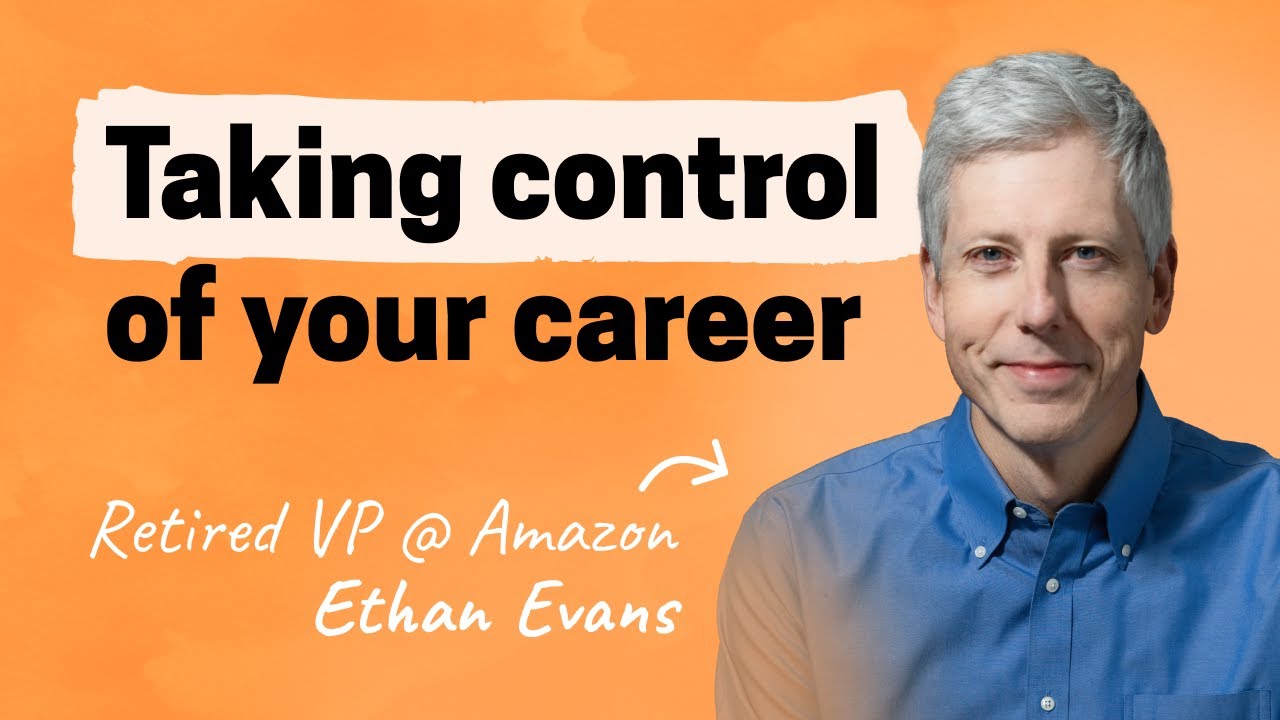
Taking control of your career | Ethan Evans (Amazon)
TL;DR
- 1The Magic Loop: do your job well, offer help, deliver, then ask for help.
- 2Managers are rarely offered help, and they help those who help them.
- 3Senior managers get stuck at a choke point; practice next-level skills now.
- 4Invention is systematic: expertise, focused time, and combining existing ideas.
- 5After failing Bezos publicly, ownership and hourly updates rebuilt trust.
Key Insights
- 1
The Magic Loop has five simple steps
Ethan Evans, a former Amazon VP who spent 15 years at the company, lays out his career framework in five steps: do your current job well (in your manager's eyes, not just your own); ask your manager how you can help; do whatever they ask, even if it isn't exciting; then go back and ask whether there's a way to help them that also moves you toward your own goal; and repeat. He named it the Magic Loop because readers wrote back asking how to "turn it off" after being promoted faster than they could absorb.
- 2
It works because managers are rarely offered help
Evans says very few people ever ask their manager, "What can I do to help you?", so simply asking sets you apart and signals you're on the same team. Management can be a lonely job, he explains, and managers naturally help those who help them. He contrasts this with an oppositional relationship, like a student trying to skip as many classes as possible and still scrape a D, which he says won't build a career.
- 3
It's in your control, whatever your manager "should" do
To people who ask why their manager shouldn't just notice their work and plan their career, Evans replies that "what your manager should do and $4 will get you a cup of coffee at Starbucks." Many managers mean well but get absorbed in their own work, and "next week drifts on for a year." The point of the loop is that you drive it. He adds that managers can start the loop from their side too, by asking reports about their goals and offering a partnership.
- 4
You have to state your goal, and it needn't be a promotion
Step four only works if you know what you want and say it out loud. Evans says managers tend to assume either that you want to keep doing exactly what you do now, or that you want their own path into management. Your goal can be a promotion, a raise, a new skill, a different team, or a better-balanced life. He used the loop himself late in his career to move into gaming rather than chase another promotion.
- 5
The results Evans has seen from the loop
He shares two examples. A reader in the UK who had been made redundant applied the loop, was offered a $30,000 raise and a bigger job, then took an even better offer elsewhere and was promoted there too. At Amazon, an engineer who joined Evans's team at a mid level grew over about eight years into a director leading hundreds of people, then founded and sold a startup and is now an executive vice president at a major online bank.
- 6
At senior levels, the loop becomes proactive
Evans says the loop "peters out" in its explicit form as you rise: you move from asking "How can I help?" to suggesting what needs doing, to fixing problems yourself and keeping your leader informed. He calls that last stage an advanced mode that depends on rapport and trust. Jumping straight to it with a new manager risks working on things they don't value, or even working against their goals.
- 7
Why senior managers get stuck, and what to do about it
Evans explains that the senior-manager level is a choke point: a director may have six to eight senior managers under them, and companies aren't growing as fast as they once did. At Amazon he went from managing six people to 800 in about nine years, which he describes as "riding the elevator." Promotion at this level, he says, depends both on being ready and on the company needing such a role. He recommends practicing next-level skills such as influence, strategy and invention now, citing Marshall Goldsmith's book *What Got You Here Won't Get You There*. One of his coaching clients was given the teams of two peers who were let go.
- 8
Bosses have a selfish reason to promote you
Evans pushes back on the idea that bosses hold people down. As a leader, he says, he wants the strongest, most capable direct reports possible, because people who can do more of his job are the only way he can do less of it.
- 9
Invention can be learned systematically
Evans says he didn't see himself as an inventor when he joined Amazon, but its leadership principles pushed him to become one, and he now holds over 70 patents from his 15 years there. His method: be knowledgeable in the area first, set aside dedicated time away from devices to think, and combine two things that already exist. His drone-delivery patent came from crossing drones with military history: an "aircraft carrier for drones" became an open-top truck that drones fly to and from while it drives around a neighborhood. He also says his former boss Bill Carr wishes he had titled *Working Backwards* "The Invention Machine."
- 10
You only need two hours of invention a month
Evans argues people overestimate how much time invention takes: two hours once a month is enough, because a single good idea often takes years to fully express. He points to Amazon Prime, which keeps improving as a 20-plus-year-old idea, and to the Kindle. You don't need many good ideas to be seen as highly inventive.
- 11
How to stand out in interviews
Having interviewed over 2,500 people, Evans says evidence suggests appearance and enthusiasm are the top factors. He goes into every interview wanting the offer, even if he later decides against the job. Beyond that, he says strong candidates describe the impact of their work, not just the work itself, because a hiring leader has a problem to solve. On video calls, he advises not interviewing from a car, keeping the camera on, and keeping eye contact, and jokes that the best prep may be a good night's sleep and a pot of coffee.
- 12
Failing Jeff Bezos on the Appstore launch
As a director about six years in, Evans led the launch of Amazon's Android Appstore. Bezos had written a launch letter highlighting a "test drive" feature that let users try apps in the browser, but on launch morning it still wasn't working. By 6:15 AM Bezos was emailing, "Where's the letter?" The thread grew into an escalating chain of angry executives. Evans says he owned the failure immediately, then sent hourly updates with a plan and a time for the next update, which he describes as "buying life one hour at a time." Leaders reached out through back channels to help, and AWS principal engineers solved the immediate database problem by giving the team 500 machines.
- 13
Face the person you let down
The next week, Evans chose not to skip a meeting with Bezos and sat right next to his chair. At the end, Bezos turned to him and said, "I bet it's been a hard week," and they had a human conversation. Evans's takeaway is that angry emails are easy, but being angry with someone three feet away is hard. He re-earned Bezos's trust and was promoted to vice president two years later, which he says shows you can dig out of almost any hole if you manage it well.
- 14
"Did you know you were gambling?"
Evans then tried the same in-person approach with Jeff Wilke, Bezos's number two, who asked whether he knew he was gambling by launching on a fixed date. When Evans said yes, Wilke told him he had been wrong to put the date ahead of Amazon's reputation, but that if he hadn't known he was gambling, "we'd be discussing your departure." His lessons: "fear the New York Times headline," use beta tests instead of surprise launches, and support the people involved. He regrets not reassuring the new-graduate engineer whose unsupported code had failed, and who soon left the company.
- 15
Ownership, bias for action, and contrarian views
Evans helped rewrite Amazon's Ownership principle after it was dropped during a revision, and proposed the line "An owner never says that's not my job." Because Amazon's roughly one and a half million employees live by the principles, he calls it the most impactful thing he's written. He also champions Bias for Action, arguing that being right is good but being quick is necessary. He's contrarian on remote work, which he expects to win long-term because offices have had about 300 years to improve while remote work has barely begun, and on doing business on a handshake. His most-recommended books are *Decisive*, *Leadership and Self-Deception*, and *The Almanack of Naval Ravikant*.
Chapter Breakdown
- 5:11The five steps of the Magic Loop
- 8:42Why it's called the Magic Loop
- 11:36It's in your control, and managers can start it
- 13:06Magic Loop success stories
- 15:46The advanced mode at senior levels
- 23:15Breaking out of the senior-manager plateau
- 29:07Becoming systematically inventive
- 33:42Two hours a month of invention
- 36:06Standing out in interviews
- 40:42Failing Jeff Bezos on the Appstore launch
- 47:55Facing Bezos in person
- 53:58Jeff Wilke: "Did you know you were gambling?"
- 57:53Lessons: beta tests and the engineer he lost
- 1:00:29Writing Amazon's Ownership principle
- 1:03:36Bias for action and other principles
- 1:08:57Contrarian corner: remote work and handshakes
- 1:12:02Lightning round
Prefer a narrative?
Read the full blog post